Why Energy Resources Remain a Source of Conflict
Every crisis subjects the global energy system to a stress test, revealing a core truth: the energy transition does not unfold in a vacuum driven solely by climate ambitions, but rather advances within a world shaped by geopolitical shocks, economic fragmentation, and national priorities. Beyond immediate price pressures, recent crises have exposed a deeper structural challenge: the energy transition risks exacerbating existing inequalities—both within nations and among them. Higher energy costs disproportionately impact low-income households, while the fiscal responses adopted by various regions to protect consumers have varied widely.
Competition for Resources
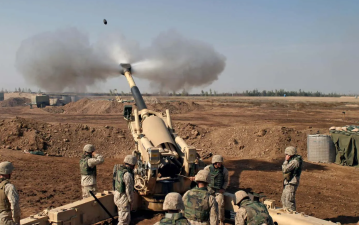
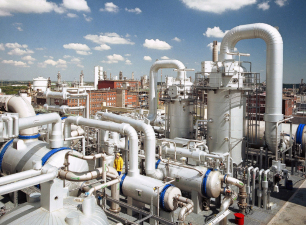
One of the most common root causes of international conflict is competition for resources. Resources—including land, water, minerals, and other natural assets—serve as the foundation of human societal productivity. Given the inherent scarcity and finite nature of natural resources, nations must leverage their own endowments to meet the economic development needs of their populations; this imperative inevitably leads to competition and rivalry over resources, which frequently escalates into international conflicts.
- Examples of Resource Competition: The world's largest coal reserves are concentrated in nations such as the United States, Russia, and China; consequently, coal production volumes are exceptionally high within these countries. This dynamic is replicated across various natural resources, giving rise to competition over economic and political interests within the international community.
- The Perils of Resource Competition: The struggle for resources can trigger destructive wars, inflicting harm upon both the environment and humanity. As economic activity and population growth continue unabated, competition for resources is likely to intensify further, thereby heightening the risk of international conflict.
The Evolution and Causes of the First Energy Crisis
The first global energy crisis unfolded across the following four distinct stages:
Europe Experiences Initial Outbreaks of Natural Gas Shortages and Electricity Supply Crises
Between May and December 2021, spot natural gas prices at the European TTF (Title Transfer Facility—the Dutch trading hub widely regarded as the benchmark for European gas prices) surged 3.3-fold in a span of just seven months. Given that European electricity systems rely heavily on natural gas for power generation, this drastic rise in gas prices triggered a sharp escalation in electricity tariffs. The primary reasons for the natural gas shortage in Europe include: First, accelerated vaccination rates, economic recovery, and the relaxation of pandemic control measures have triggered a strong rebound in natural gas demand. Second, the sharp decline in oil and gas prices in 2020 led to reduced investment, thereby constraining production growth and export volumes in key producing nations such as Australia and the United States. Third, extreme weather events—including severe winter cold and scorching summer heat—caused Europe's natural gas inventory levels to fall to 74% of total storage capacity, a figure 16 percentage points lower than the five-year average. Fourth, deteriorating wind conditions resulted in a 17.3% year-on-year decline in wind power generation within the EU during the first nine months of 2021—the lowest level recorded in nearly three years. Fifth, steadily rising carbon prices in Europe have placed constraints on coal-fired power generation, thereby driving up natural gas prices.
The natural gas supply crunch in Europe has spilled over into the Asian spot market for liquefied natural gas (LNG)
As LNG continues to account for an increasing share of global natural gas trade, the degree of integration within the natural gas market has deepened significantly, leading to stronger price correlations in spot markets. Competition for imports among energy companies in Europe and Asia has intensified; specifically, Asian importers have secured additional supplies of U.S. natural gas by offering higher prices, thereby diverting supplies away from European destinations. Consequently, the surge in European natural gas prices has triggered a sharp upward trend in LNG prices across the Asia-Pacific region. The Asian spot market benchmark—the JKM price (Platts Japan-Korea Marker)—soared from $10.47 per million British thermal units (MMBtu) in May 2021 to $56.33/MMBtu in October (where 1 Btu is approximately equal to 1,055 joules), reaching an all-time high.
The natural gas shortage has rapidly rippled through the coal market
Coal represents the most readily available substitute for natural gas as an energy source. As power plants and heating providers increasingly turn to coal, both the demand for and price of coal have risen sharply. However, constrained by factors such as the pandemic, carbon reduction mandates, and adverse weather conditions, growth in global coal production—particularly among major producers—has remained sluggish, resulting in a supply deficit. By mid-October 2021, benchmark prices for thermal coal across major global markets had all exceeded $240 per ton—a year-on-year increase of more than threefold—marking a new high since 2008.
The soaring prices of natural gas and coal have spilled over into the oil market
When calculated on a thermal value (heating content) basis, natural gas prices are significantly higher than those of crude oil. In October 2021, natural gas prices in the European market stood at approximately $31 per million British thermal units (MMBtu); when converted to the equivalent thermal value of crude oil, this figure reached $176 per barrel—2.2 times the price of the latter. Amidst an already tight global oil supply, fuel oil was increasingly utilized as an alternative energy source for natural gas-based heating and power generation, thereby further exacerbating the existing oil supply deficit. Concurrently, shortages in coal supplies and a sharp surge in coal prices also contributed to an uptick in demand for oil.
The Russia-Ukraine Conflict Triggers a Second Wave of the Global Energy Crisis
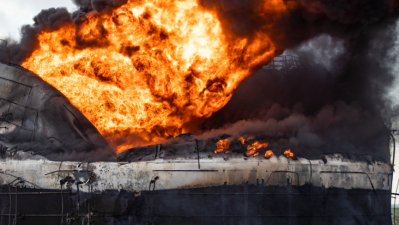
Since the outbreak of the conflict between Russia and Ukraine on February 24, 2022, the global energy market has been engulfed by a second wave of crisis. Russia is an energy superpower, holding a pivotal position across the global oil, natural gas, and coal sectors; Europe, in particular, remains heavily dependent on Russian oil and gas resources—most notably pipeline natural gas. Comprehensive sanctions imposed on Russia by the United States and the West, coupled with Western corporate boycotts of Russian energy products—as well as the standoff between Russia and Europe regarding the settlement of natural gas trade in rubles—have inevitably resulted in severe disruptions to Russian oil and gas exports and a drastic decline in production capacity. Furthermore, the reluctance of OPEC (the Organization of the Petroleum Exporting Countries) to increase oil production has led to a rapid exacerbation of global energy supply shortages and a massive surge in global energy prices. International crude oil prices, which stood at just over $90 per barrel prior to the Russia-Ukraine conflict, briefly soared past the $130 per barrel mark and currently continue to hover at a high plateau of around $110 per barrel. Prices for liquefied natural gas (LNG) have skyrocketed, with the European TTF benchmark price briefly exceeding $70 per MMBtu; meanwhile, international coal prices have surged to $300 per ton, reaching an all-time high.
Why Has the Russia-Ukraine Conflict Exerted Such a Drastic Impact on the Global Energy Market?
Russia is an energy superpower, holding a pivotal and indispensable position within the global energy landscape
Russia ranks as the world's third-largest oil producer, boasting a daily output of approximately 11.3 million barrels, and stands as the world's largest exporter of petroleum products. In 2021, Russia's daily exports of oil and petroleum products exceeded 7.8 million barrels—comprising 5 million barrels of crude oil and 2.85 million barrels of refined petroleum products. Russia possesses the world's largest natural gas reserves and ranks as the second-largest natural gas producer and the largest natural gas exporter globally. In 2021, Russia's natural gas output reached 762 billion cubic meters, with exports totaling 252 billion cubic meters. Russia is also the third-largest coal exporter, with an annual export volume of 260 million tons, accounting for 17% of global coal exports.
Russia and Europe are highly interdependent in the energy sector, with Europe exhibiting the highest degree of reliance on Russian natural gas
Russia serves as Europe's primary source for imports across the natural gas, oil, and coal sectors. In 2021, imports of natural gas, crude oil, and coal from Russia accounted for 45%, 27%, and 46% of Europe's total imports in these respective categories; conversely, 74% of Russia's natural gas exports, 49% of its oil exports, and 32% of its coal exports were directed toward Europe. Europe has developed a highly rigid and entrenched reliance on Russian pipeline natural gas, making it difficult to identify alternative suppliers. In 2021, Europe imported a total of 155 billion cubic meters of natural gas from Russia, comprising 140 billion cubic meters of pipeline gas and 15 billion cubic meters of liquefied natural gas (LNG).
Sanctions imposed by the United States and the West will severely undermine Russia's capabilities regarding oil and gas exports, investment, and production
Sanctions imposed by the U.S. and the West on Russia's energy sector primarily involve measures such as prohibiting or reducing imports, banning the export of equipment and technology, restricting or prohibiting financial services, mandating divestment or banning new investments, and sanctioning ports and shipping companies. These measures have resulted in severe disruptions to Russia's oil and gas exports, compelling the country to curtail both investment and production capacity. Western energy companies have largely ceased signing new procurement contracts with Russia and have drastically reduced their purchases of Russian energy supplies. This situation has led to a massive surplus of energy within Russia, while other European nations face severe energy shortages—a dichotomy that has resulted in the simultaneous occurrence of rapidly rising international benchmark energy prices and heavily discounted prices for Russian energy exports.